Your car smells like it's burning. Here's what to do.
First, decide whether to shut the car off. Smoke, warning lights, rising temperature, or a change in how the car drives matter more than the exact smell.
Stop driving now if any of these are happening:
- You see smoke or flames.
- You smell raw gasoline or melting plastic.
- The temperature gauge is hot or still climbing.
- An oil-pressure, temperature, or other red warning light is on.
- The brakes, steering, engine power, or electrical system suddenly feel different.
Pull over somewhere safe and turn the engine off. Move away from the vehicle if you see fire or heavy smoke, and call 911 if there is a fire. Do not open a hot radiator cap. Arrange a tow instead of trying to make it to a shop.
No flames or smoke, but you are not sure what is safe? Call KC Auto Repair at 918-834-0665 and describe what you are seeing and smelling.
What does it smell like?
Pull over, shut it off, and pay attention for a minute.
- Check the dashboard for warning lights or a high temperature gauge.
- Notice whether the smell is strongest inside the cabin, under the hood, or near one wheel.
- Look for smoke or fluid beneath the vehicle without touching hot components.
- Think about when it began: after an oil change, while braking, with the air conditioner on, or during a long drive.
- If the smell is strong or comes back, call a shop before driving again.
What different burning smells may mean
These descriptions can help you explain the problem to a shop, but they won't confirm the cause.
It smells like hot oil.
What it may mean: Engine oil or another fluid may be leaking onto a hot engine or exhaust surface. Sometimes a small amount of oil spilled during recent service creates a temporary odor, but an active leak needs attention.
What to do: Look for fresh spots where the car was parked. Stop immediately if you see active smoke, the oil-pressure light appears, or the engine sounds different.
It smells strangely sweet.
What it may mean: Coolant has a sweet odor. Steam, a wet area under the front of the vehicle, or a climbing temperature gauge may indicate a cooling-system leak or overheating.
What to do: Shut the engine off if the temperature is climbing. Never remove the radiator cap while the engine is hot.
It smells like burning rubber.
What it may mean: A belt may be slipping, a hose could be touching a hot surface, or another moving part may be rubbing. You might also hear squealing or notice a change in steering or charging.
What to do: Avoid touching or reaching near belts with the engine running. Have it inspected before a damaged belt or hose fails completely.
It smells like melting plastic or hot wiring.
What it may mean: Overheated wiring, insulation, a blower motor, or another electrical component can create a sharp hot-plastic odor. Electrical problems can worsen quickly.
What to do: Turn the vehicle off if the smell is strong, smoke appears, accessories stop working, or lights begin flickering. Arrange a tow when there are signs of overheating wiring.
It smells strongest near a wheel.
What it may mean: Brakes can overheat after hard use, but a sticking brake may create the same odor during ordinary driving. The vehicle may pull to one side or one wheel may feel unusually hot.
What to do: Stop driving if a wheel is smoking or braking feels different. Do not touch the wheel or brake components to test their temperature.
It smells like raw fuel.
What it may mean: A persistent gasoline odor may indicate a fuel leak or another fuel-system problem.
What to do: Turn the engine off, stay away from cigarettes or flames, and arrange a tow. Move away from the vehicle and call 911 if you see fire.
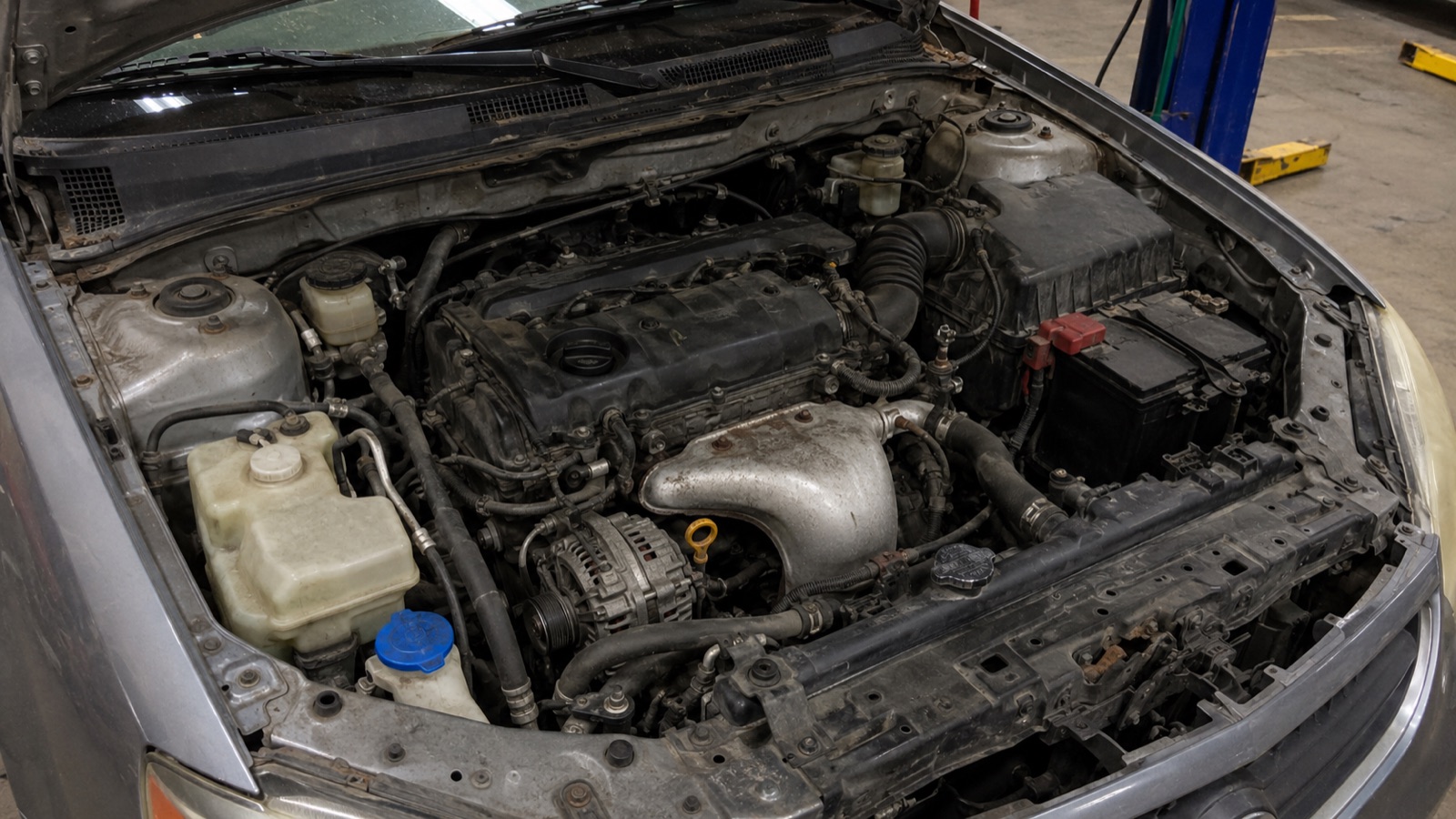
What a mechanic will check
Tell the shop when the smell happens, where it's strongest, how long it lasts, and what else changed. The technician may check for fluid leaks, overheated wiring, damaged belts or hoses, cooling-system problems, or dragging brakes.
They should find the source before recommending parts.
You don't need the right technical word. Mention warning lights, smoke, recent service, where the odor is strongest, and whether the car drives differently. “It smells weird” is still useful.
Burning-smell questions
Why does my car smell like burning oil after an oil change?
A small spill can smell as the residue burns off, but a loose filter, drain-plug problem, or active leak should also be ruled out. If the odor persists, you see oil underneath the car, or the oil-pressure light appears, turn the engine off and contact a shop.
Can the air conditioner cause a burning smell?
Yes. A blower motor, resistor, wiring problem, debris in the ventilation system, or a belt-driven component may create heat or odor. Turn the climate-control system off. If the odor remains or is strong, stop and arrange an inspection.
Why do I notice the smell only after I stop?
Airflow while driving can carry odors away. When you stop, heat and vapor may collect around the vehicle and become easier to notice. That detail helps a technician, but it does not identify the cause by itself.
What if the car smells burnt and now will not start?
Do not keep trying to start it if you smell fuel, hot wiring, or melting plastic. Repeated attempts can worsen an electrical or mechanical problem. Arrange a tow and explain what happened immediately before the no-start condition.
Tell us what happened.
Call us and tell us what you're smelling, whether you see smoke or warning lights, and whether the car feels different. We can help you decide if it needs a tow.
Call 918-834-0665 Shop hours and directions